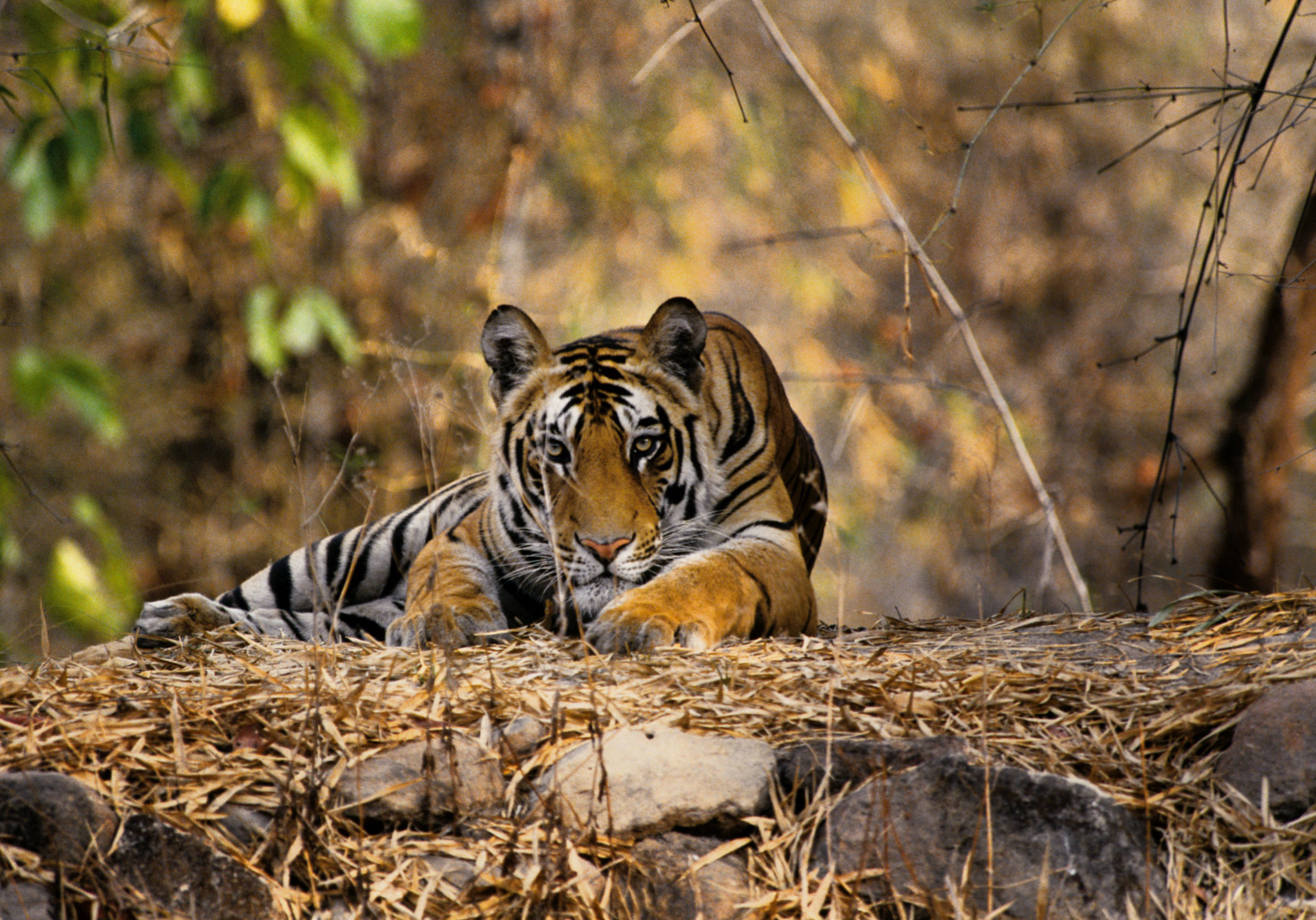

Tigers
A long history of persecution
Hunting for sport probably caused the greatest decline in tiger populations up until the 1930s. In many areas tigers were also regarded as a pest that needed to be exterminated. By the late 1980s, the greatest threats were loss of habitat due to human population expansion and activities such as logging; and trade in tiger bone for traditional medicines
Current threats to tigers can be separated into:
- Poaching, which includes the illegal trade of tiger parts and products
- Habitat loss and fragmentation, including from illegal logging and commercial plantations
- Retributive killing due to human-tiger conflicts.
Poaching and Illegal Trade
Deliberate and large-scale illegal hunting of tigers for their body parts has seen tigers completely wiped out in several reserves set up to protect them. Traders are even storing dead tigers for their parts, which increase in value as numbers of live tigers fall.
Find out what WWF is doing to stop poaching and illegal trade.
Adopt a Tiger
Habitat Loss
Over the past few decades, tiger habitat has been extensively destroyed, degraded and fragmented by human activities – mainly clearing of forests for agriculture and the timber trade and development activities such as the building of road networks. In the last 10 years, tiger habitat decreased by an alarming 45%. Today, tigers occupy just 7% of their historic range.
Find out what WWF is doing to protect tiger habitats.
Tiger News
-
งานประชุมในพระราชูปภัมป์เพื่อรับมือกับการลักลอบค้าสัตว์ป่า
ลอนดอน – วันนี้ (21 พฤษภาคม) ...
-
Deer finding documents success of prey recovery program for endangered Amur tigers and leopards
Jilin, China – The recent discovery of a preyed upon deer is seen as a major sign of progress in the efforts to boost the populations of endangered Amur tigers and leopards in China.The body of ...
-
New forest loss figures highlight need for green growth in the Greater Mekong
Bangkok, Thailand: The Greater Mekong subregion in Southeast Asia risks losing more than a third of its remaining forest cover within the next two decades if regional governments fail to boost ...
Human-tiger Conflict
The resulting conflict not only threatens the world's remaining wild tigers, but poses a major problem for communities living in or near tiger habitat. If tigers do not have enough prey (due to hunting of prey species by people or poor quality habitat), they are forced into hunting domestic livestock – which many local communities depend on for their livelihood. Conflict with humans is a significant problem, particularly in Malaysia, Nepal, Bangladesh, and India.
In retaliation, tigers are often killed or captured and sent to a zoo, in an effort to prevent similar events happening in the future. Tigers killed as “conflict” animals often end up for sale in the black market, creating a link between human-tiger conflict and poaching for the illegal trade in tiger body parts.
Find out what WWF is doing with governments and other influential groups to protect tigers.
There is still hope
Learn more about what WWF is doing for tigers.


Sign up for a BMO® WWF-Canada AIR MILES® MasterCard®